Oil Terminal
On the way to the future
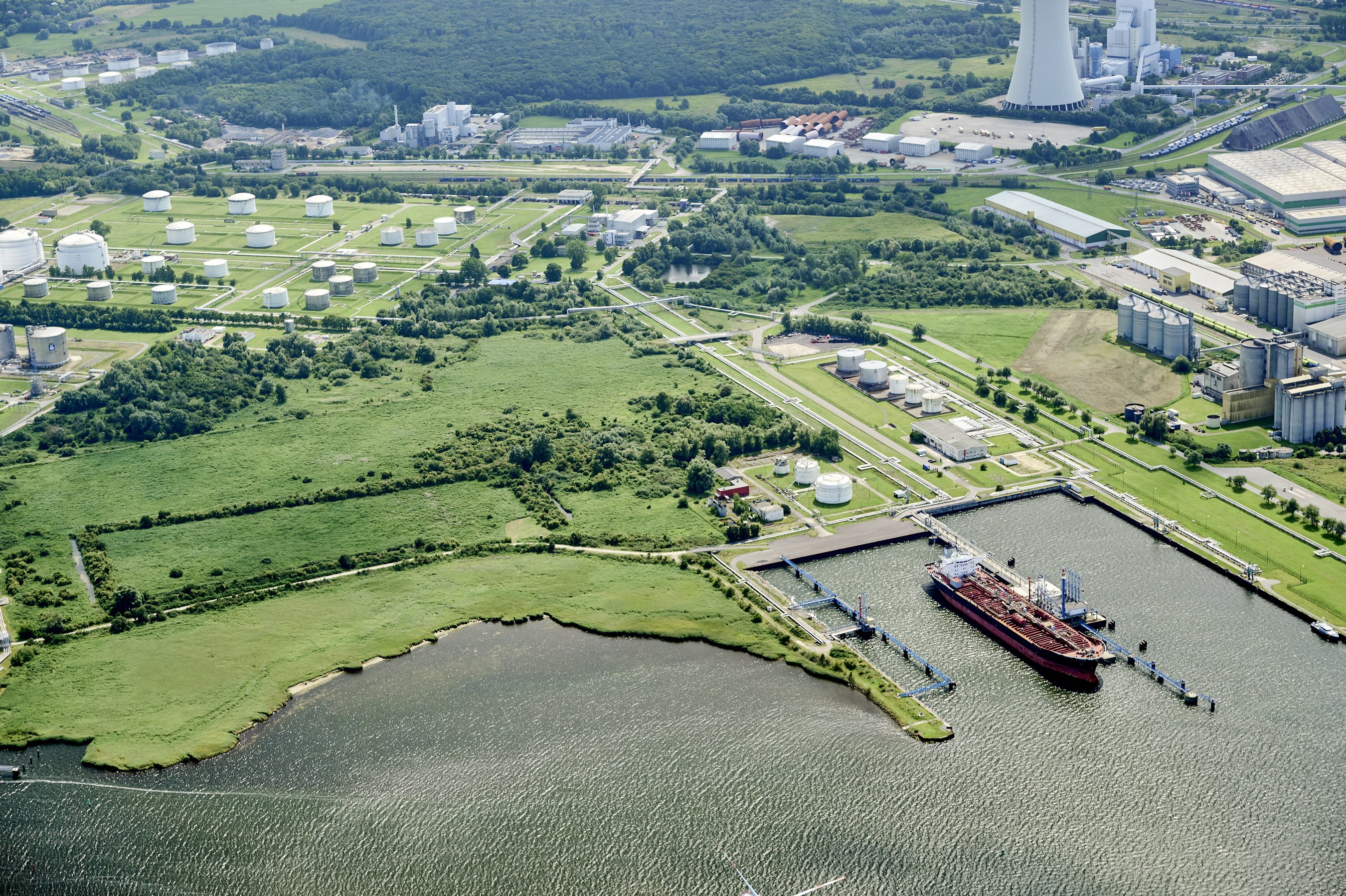
The oil terminal has a tank farm with a capacity of 700,000 cubic meters, which is designed for the storage and transshipment of petroleum products such as heating oil, diesel, and gasoline. Crude oil, liquid fertilizer, and other liquid products are also transshipped there.
The operator is Grosstanklager Ölhafen Rostock GmbH. It is a neutral service provider for all petroleum companies that handle cargo through Rostock. The oil port is also home to a biodiesel plant with an annual capacity of 150,000 metric tons of biodiesel and 18,000 metric tons of glycerin.
BERTHS 01–06
Six berths can handle six tankers with a cargo capacity of up to 100,000 metric tons at a throughput of up to 6,000 metric tons per hour. Tanks with a total capacity of approximately 700,000 cubic meters are available for storage. Transshipment also takes place via rail tank cars, through two pipelines (Schwedt, Böhlen), or by tanker trucks. The operator is Grosstanklager-Ölhafen Rostock GmbH. It provides services to all petroleum companies that transship through Rostock. The oil port is also home to a biodiesel plant with an annual capacity of 200,000 metric tons.
2024 Port Process - Liquid Cargo
Tankers are among the largest cargo ships handled at the Rostock Overseas Port. The six berths in the oil terminal handle, among other things, mineral oils, crude gasoline, rapeseed oil, biodiesel, methanol, ethanol, heating oil, and crude oil. A tank farm with a capacity of 700,000 cubic meters is available for the storage of liquid cargo. In addition to a pipeline for transporting crude oil to the refinery in Schwedt on the Oder River, a product pipeline connects the oil port with the Böhlen site in central Germany. After Germany switched its crude oil supply to maritime transport at the end of 2022, this type of cargo alone accounted for 5.9 of the total 7.9 million metric tons of liquid cargo handled in 2023. The oil port is operated by Grosstanklager-Ölhafen Rostock GmbH.
January 22, 2020
More Environmentally Friendly Refueling
LNG Bunkering License
The first offshore LNG refueling of a ship in the Port of Rostock marks an important milestone for the LNG cluster and the expansion of services at the seaport. Following refueling operations involving tanker trucks, a ship-to-ship refueling was successfully carried out for the first time. With LNG infrastructure for ships and trucks, Rostock is promoting sustainable fuels and laying the groundwork for a comprehensive supply network.
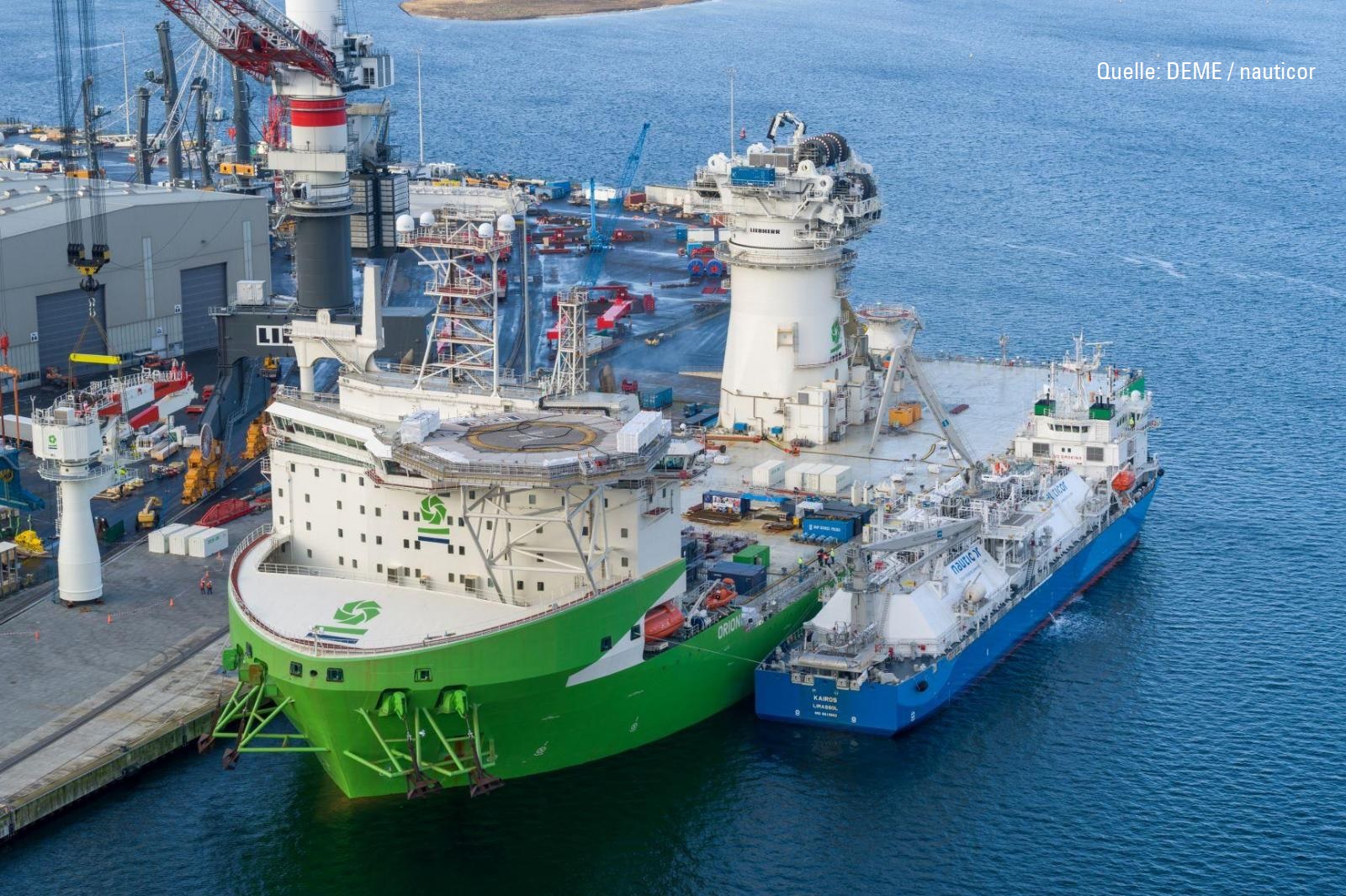
Milestone achieved
2 Years Construction
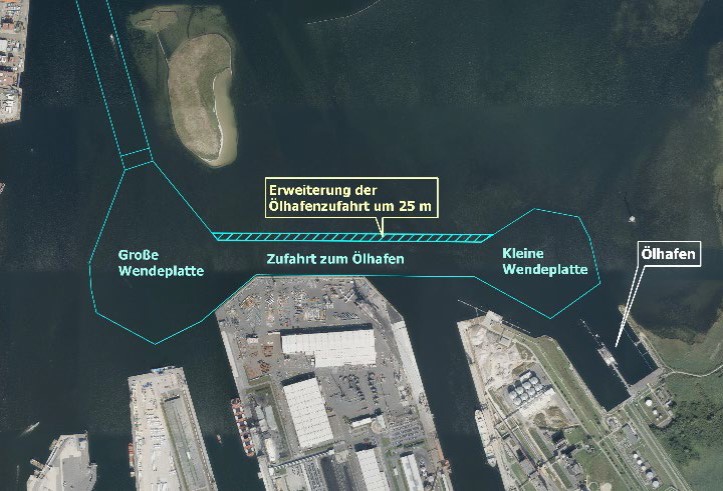
Access to the oil terminal extended by 25 met
November 2022 | Work Begins
The 16-km-long Rostock Sea Canal is being dredged to a depth of 16.5 m, allowing ships with a draft of up to 15 m to pass through in the future.
May 2023 | Milestone Reached
After seven months, the first construction phases have been completed. The oil port approach has been widened by 25 m, facilitating the safe handling of oil tankers.
November 2024 | Work completed
The dredging was completed about nine months ahead of schedule. Approximately 5 million m³ of sand, marl, and silt were moved. Baltic-Max ships can now utilize a 15-meter unloading depth.
An Import Harbour for Future Sustainably Generated Energy Sources
Hydrogen Energy Hub
“Rostock Energy Port” Pilot Project
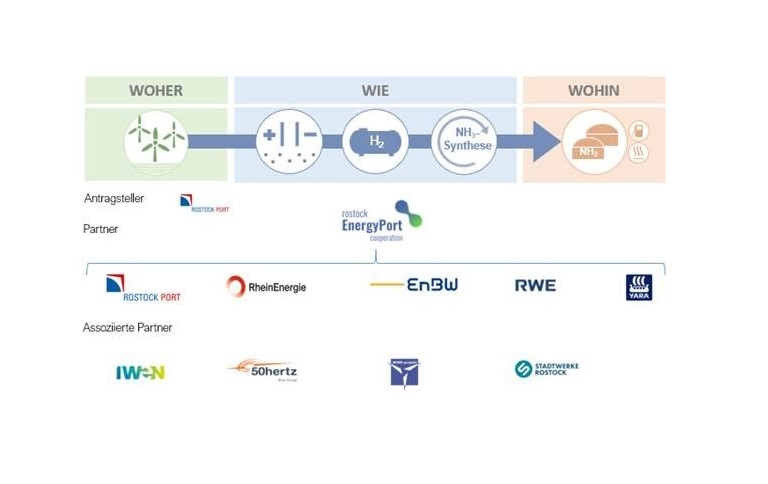
ROSTOCK PORT is participating in the IPCEI hydrogen program with “HyTechHafen Rostock.” An electrolysis and ammonia synthesis plant with a capacity of over 100 MW is to be built at the overseas port. The project, costing approximately 380 million euros, is the inaugural project of the “Energiehafen Rostock” strategy and aims to establish the port as a hub for green hydrogen and its derivatives in the Baltic Sea region.
Annual statistics Liquid Cargo 2025
Information to the Chart
The oil port has a tank farm with a capacity of 700,000 cubic meters, designed for the storage and transshipment of petroleum products such as heating oil, diesel, and gasoline. In addition, crude oil, liquid fertilizer, and other liquid products are also transshipped.
It offers berths for six tankers of up to 100,000 tdw, with a handling capacity of up to 6,000 metric tons per hour. Handling also takes place via rail tank cars, through two pipelines (Schwedt, Böhlen), or by tanker trucks.
The operator is Grosstanklager Ölhafen Rostock GmbH. It is a neutral service provider for all petroleum companies that handle cargo through Rostock. The oil port is also home to a biodiesel plant with an annual capacity of 150,000 metric tons of biodiesel and 18,000 metric tons of glycerin.

