Logistics & Businesses
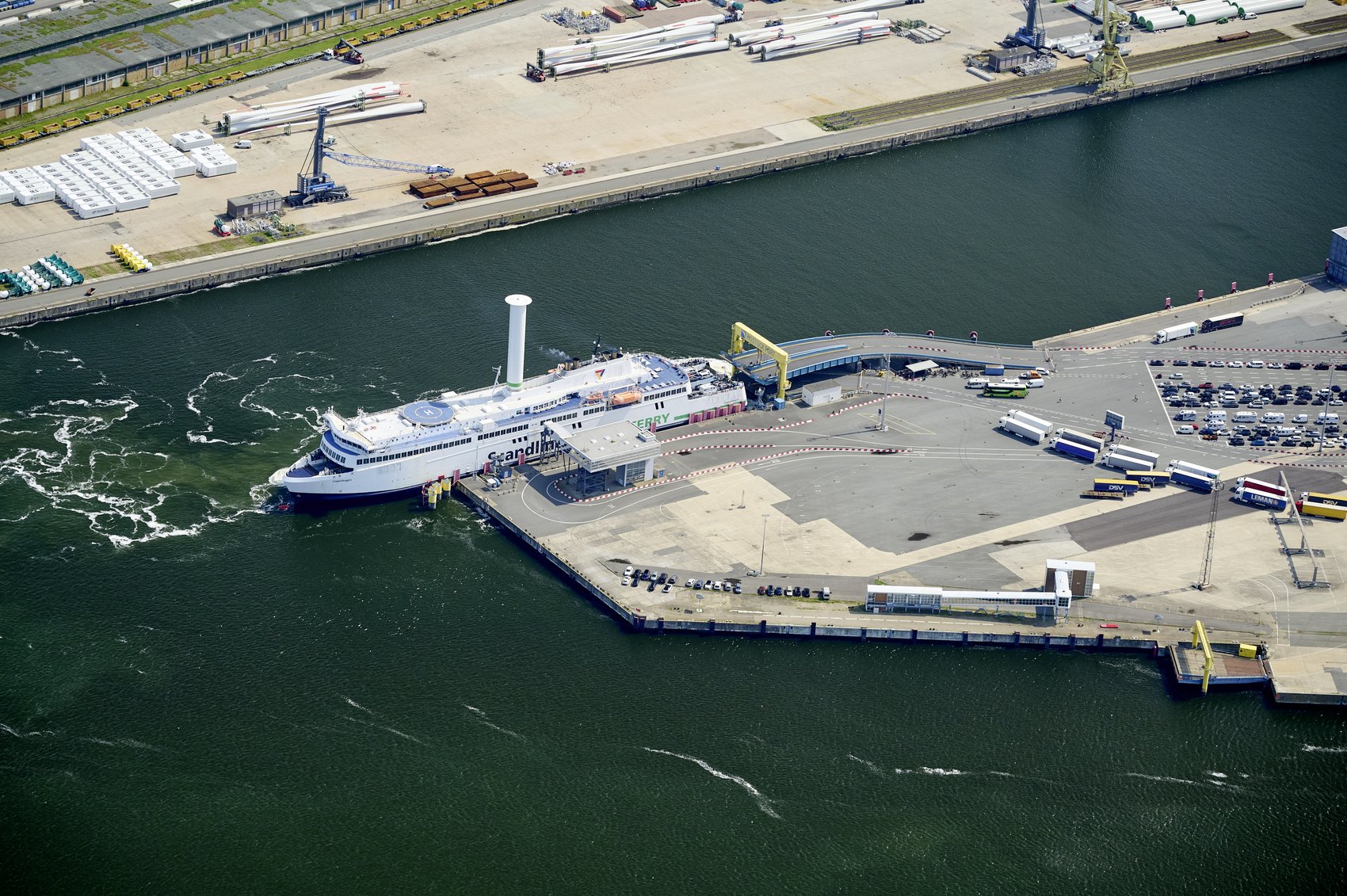
Ferry and Ro-Ro Cargo
The ferry and Ro-Ro terminals together have eleven berths. Berth 64 is also equipped to handle rail cars.
An elevated road leads directly from the ferry terminal to the A19 and A20 highways. With the nearby Ro-Ro terminal—featuring four berths—and the terminal for combined transport, the port offers optimal handling conditions for both scheduled and tramp shipping.
In 2025, rolling cargo accounted for 54 percent of the total cargo handled at the Port of Rostock. This figure serves as an indicator of the port’s balanced business model and, consequently, the efficiency of this universal port.
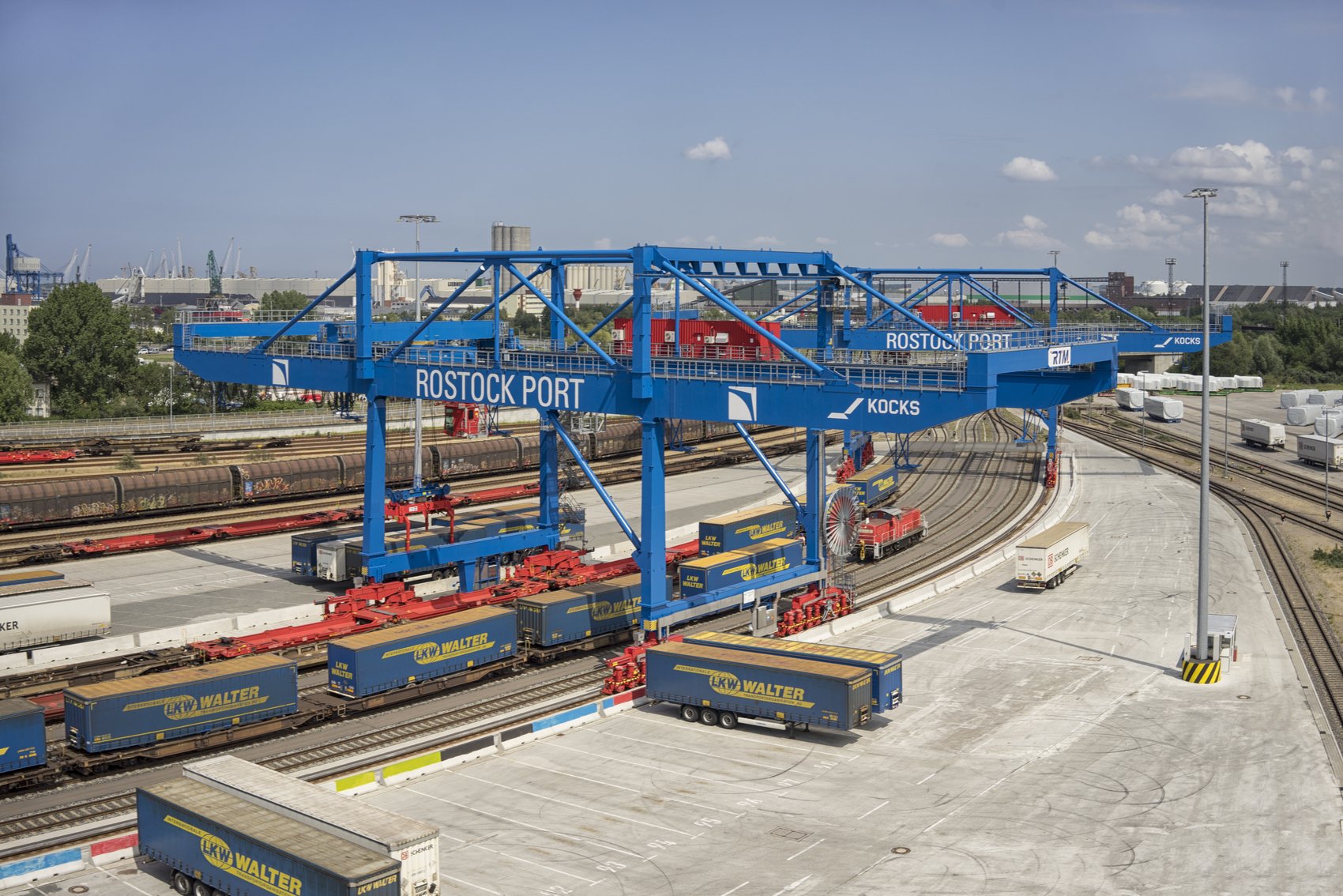
Combined Freight Transport
The high-capacity transshipment terminal for rail, road, and maritime cargo covers approximately 80,000 square meters.
A total of five tracks are served by two gantry cranes capable of operating on curved tracks, each weighing 500 metric tons, standing 35 meters tall, and spanning 76.5 meters.
Thanks to layout changes in the track area, there is now an additional capability to handle trains up to 740 meters in length.
Numerous customer inquiries demonstrate increased interest in environmentally friendly transport chains and the potential of intermodal rail transport via the Port of Rostock. To continue meeting this demand in the future, the expansion of additional intermodal capacity makes a significant contribution to strengthening the ferry and RoRo network. At the same time, this will also reduce CO2 emissions from traffic passing through the Port of Rostock.
Rostock’s major advantage is the available track capacity within the port, which allows for the flexible expansion of additional transshipment capacity even on short notice.
With the annual major schedule change, 49 combined transport trains operate weekly to and from Verona (19) and Padua (8) in Italy, Bratislava (5) in Slovakia, Oradea (2) in Romania, as well as Karlsruhe (3), Dresden (5), Herne (6), and Halle (1) in Germany. In addition, further increases in the frequency of departures are expected on certain routes in the first half of the year.
For more information, go to https://intermodal-rostock.de
Bulk Goods
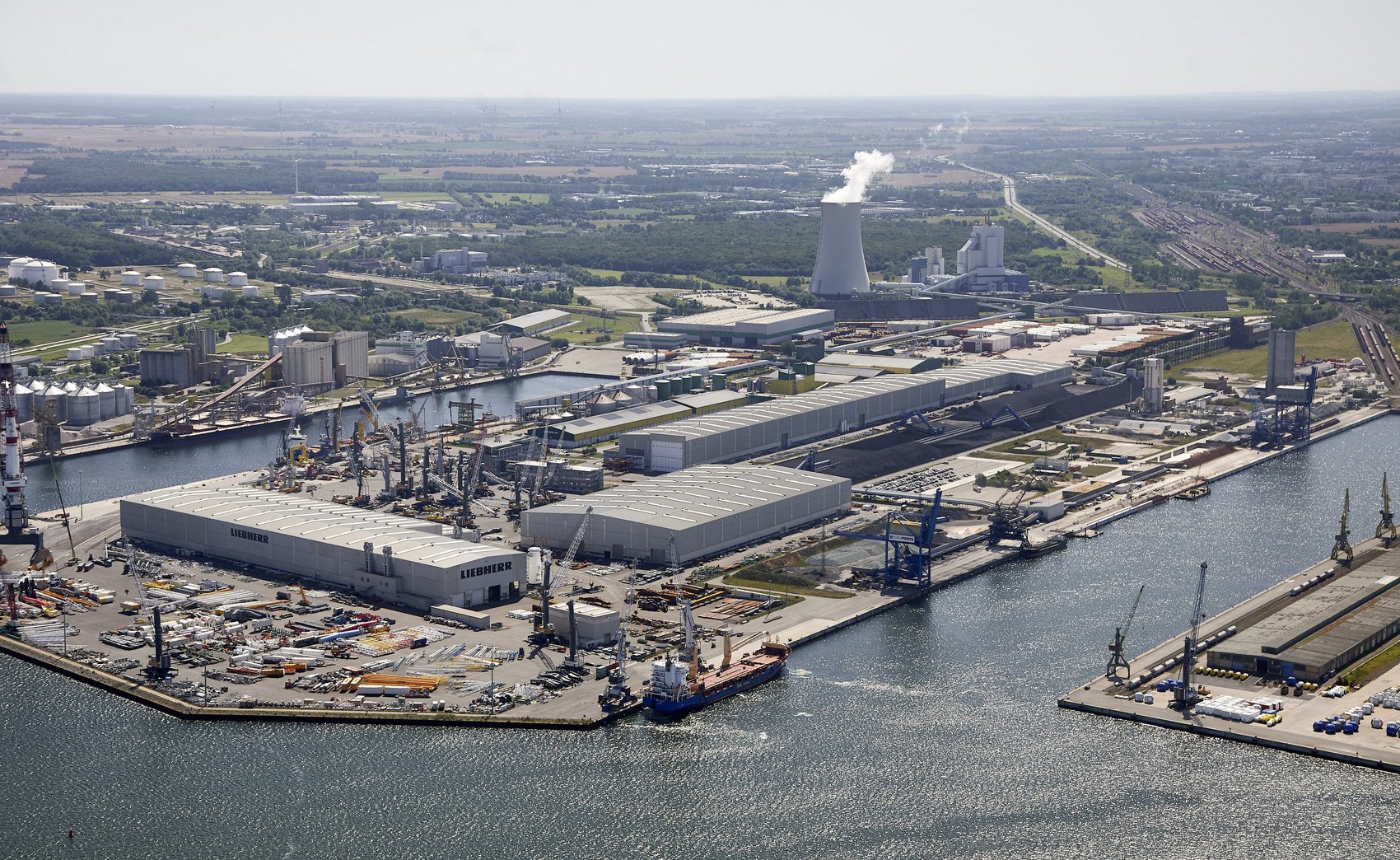
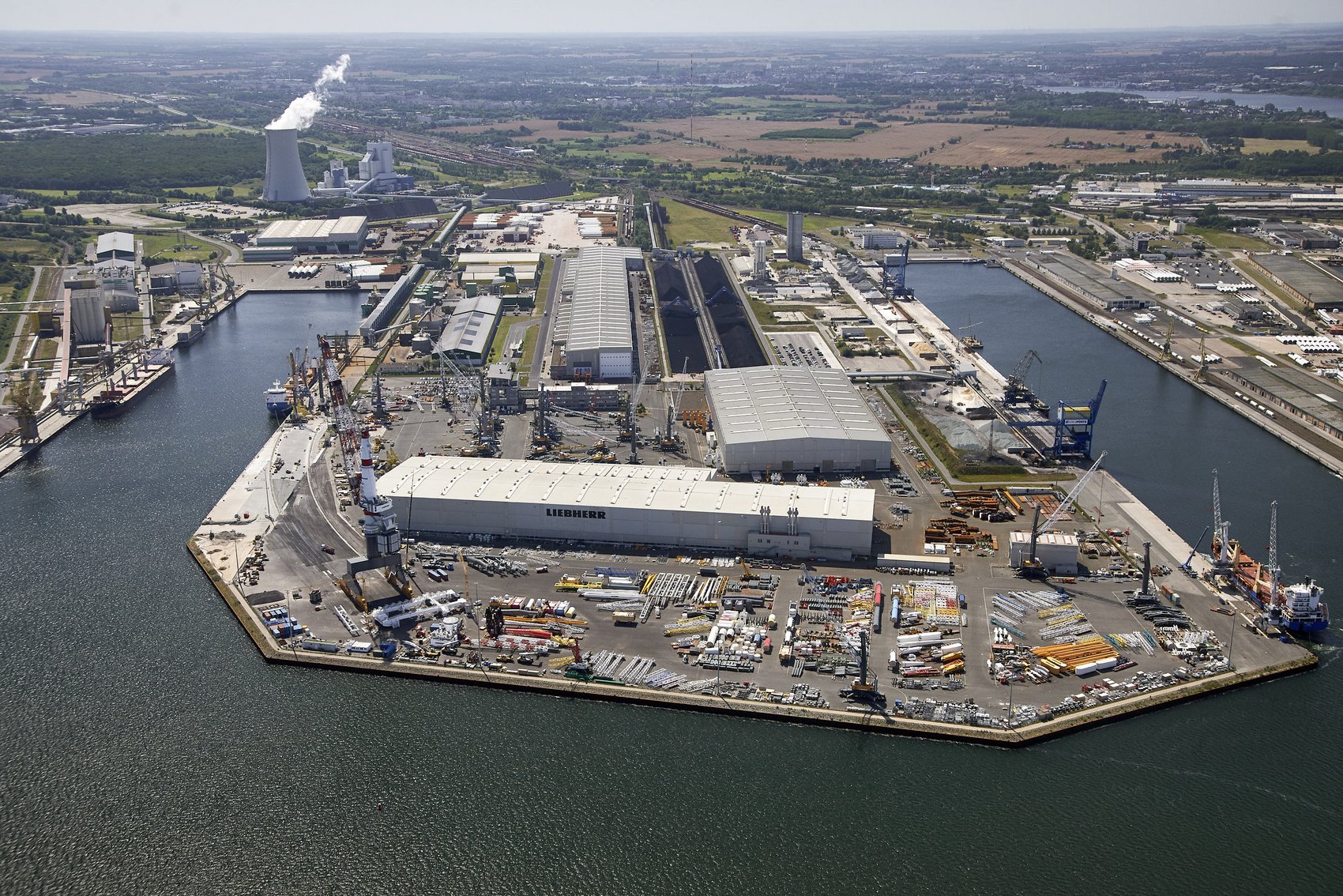
Up to 20,000 tons of coal can be discharged daily at berths 23 and 24. The rebuilding of berth 23, which is 270 metres long, was largely completed by the end of 2019. During the first six months of 2020, further work was done on paving of surfaces and railway track construction as well as dredging to a water depth of 14.50 metres. In the course of the building work the load-bearing capacity of the quay surface is increased from two to five tonnes per square meter.
Bridge cranes are used for unloading sea gravel, limestone and crushed stone at berth 22. In the middle of pier III a storage area with a capacity of 300,000 tons of anthracite coal exists. Conveyor belts carry the coal to the adjacent 500 MW hard coal-fired power station. A processing facility for sea gravel and storage facilities for building materials, agricultural products, fertilizer and other bulk goods are located at berth 21, which is equipped with a harbour mobile crane with a lifting capacity of up to 84 tons.
The port has an open storage capacity of 420,000 m² as well as a covered storage capacity of 55,000 m² available for bulk goods.
In addition to the handling of coal, building materials, fertiliser and grain are among the most important bulk cargo handled in the Port of Rostock.
General Cargo
Pier II is the heart of general cargo handling. Here are mainly metals, forest products and project cargo as well as container handled. But Pier II is mainly characterized by the transshipment of wind turbines.
Cranes with a lifting capacity of up to 100 tonnes ensure the fast handling of goods. By using two mobile harbour cranes in tandem it is possible to load goods of up to almost 300 tonnes. Furthermore, there are two cranes available for loading and unloading at berth 16, which can be equipped with hooks or grapples. Here, among other things, sheet metal and pipes for EEW Special Pipe Construction GmbH are handled.
Three solid sheds, each 360 meters long, with land and water-side track and road connections, are used for transhipment and storage. A total of 600,000 square meters of open storage and 120,000 square meters of covered storage for general cargo are available at the Rostock seaport.
High & Heavy
With berths 10, 15 and 25, the port offers three berths for the handling of particularly large and heavy goods. At berth 15, the heavy-duty areas were upgraded by ROSTOCK PORT GmbH. This is where a special quay with a heavy-duty rail track was built for a Liebherr crane with a lifting capacity of up to 1,600 tonnes,. This improves the possibilities for handling extremely heavy project cargo as well as the attractiveness of the location for further company relocations for the production and assembly of heavy cargo.
Container
Containers can also be handled at several terminals in the Overseas Port of Rostock. At the General Cargo Terminal of the handling company Euroports Germany, containers are loaded with the help of mobile harbor cranes. In addition, the units can be transported via the close-knit intermodal network with more than 40 weekly train connections and the closely scheduled ferry and roro connections to Denmark, Sweden and Finland with up to 20 departures per day.
The Overseas Port of Rostock not only operates as a transhipment point, but also as a collection and distribution center. In addition, services for packing and reloading of containers and for customs clearance are offered at the site. Partners operate a container depot directly in the port in order to be able to react flexibly to demand. The port of Rostock thus acts as an ideal transport hub for collecting and distributing containers to northern and central Europe.

Liquid Cargo
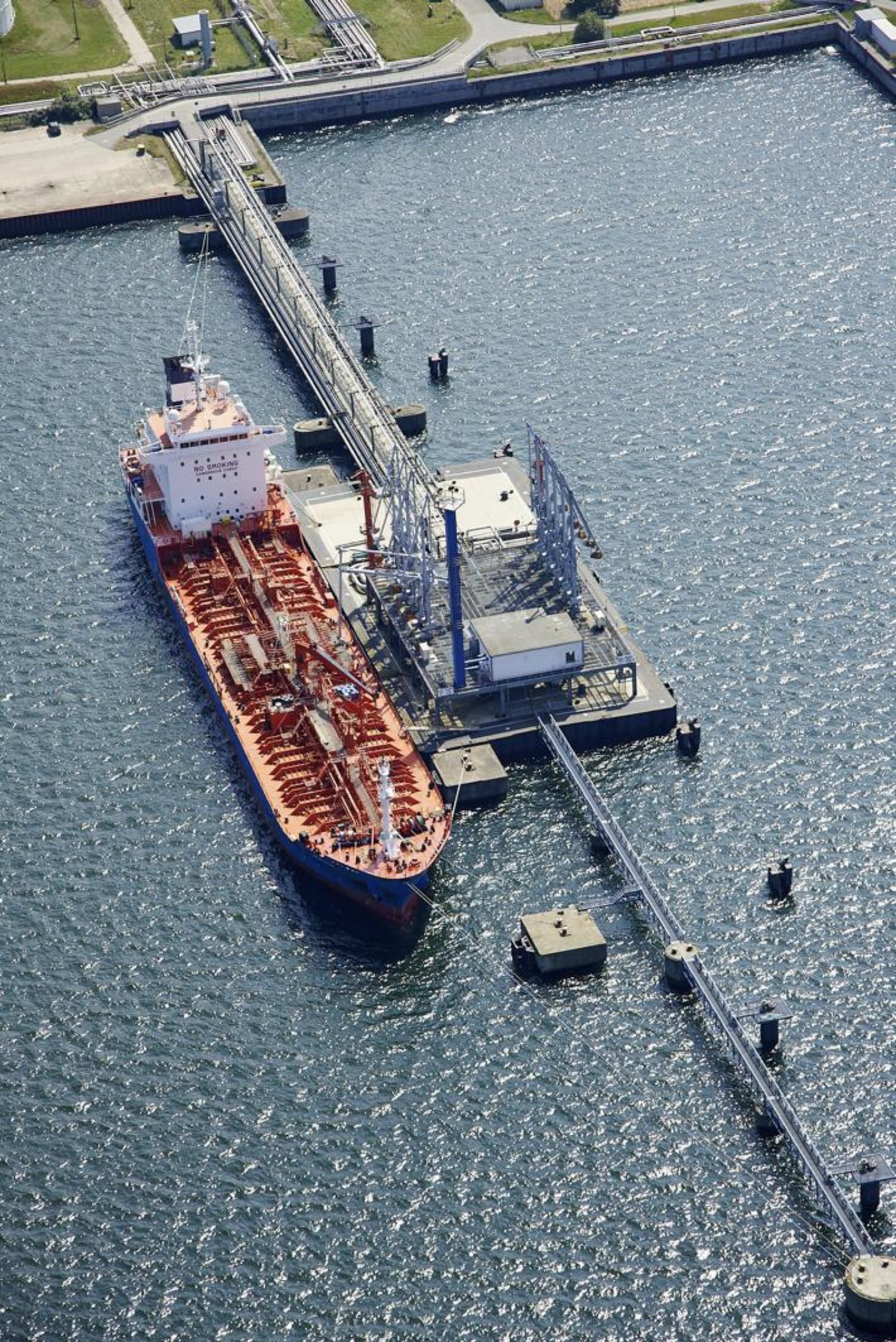
The oil harbour possesses a tank store with a capacity of 700,000 cubic meters available for the storage and throughput of mineral oils such as heating oil, diesel and motor fuel. Crude oil, liquid fertiliser and other liquids are handled here as well.
The berths at the oil harbour can accommodate six tankers with up to 100,000 tonnes and has a handling capacity of up to 6,000 tonnes per hour. The handling of liquids occurs by means of tank car, pipelines (Schwedt, Böhlen) and by tank truck.
Grosstanklager Ölhafen Rostock GmbH, a subsidiary of Eurports Germany GmbH, is the operator of the oil harbour and provides services for all mineral oil companies using the Port of Rostock.
The oil harbour is also the location of a biodiesel plant with an annual capacity of 200,000 tonnes of biodiesel and approx. 25,000 tonnes of raw glycerine in feeding stuff quality.

