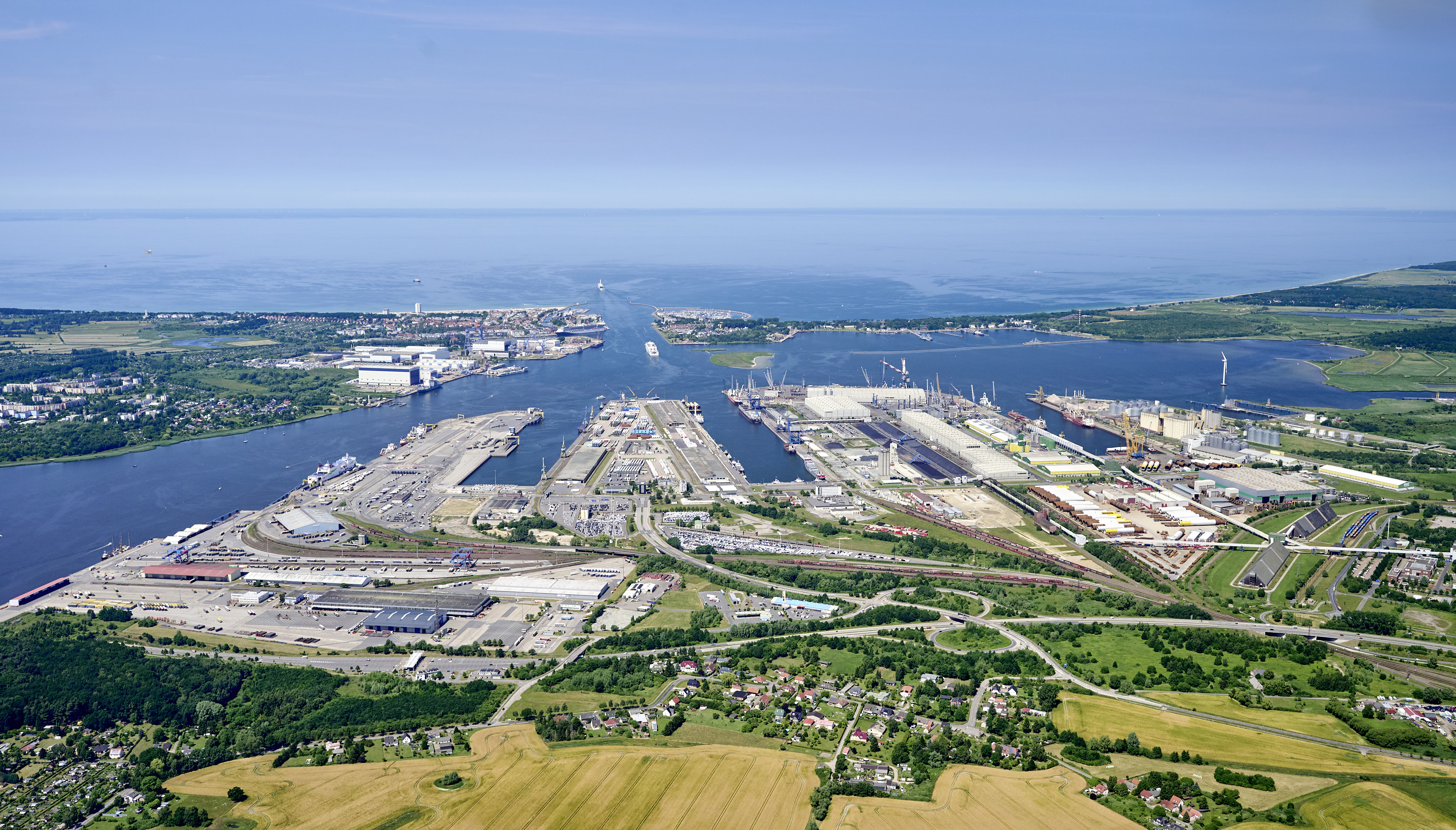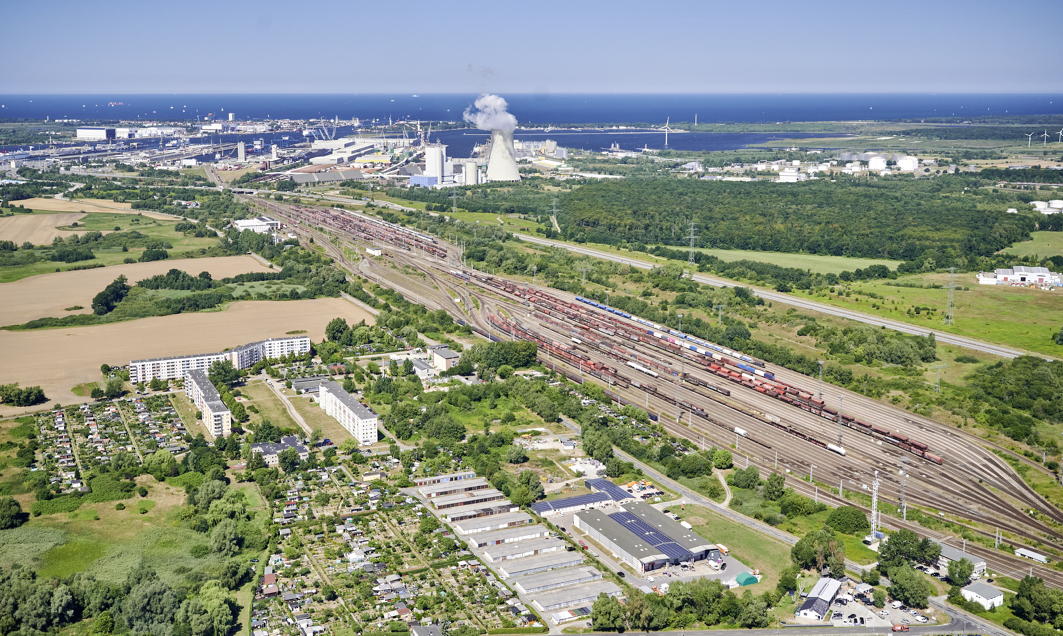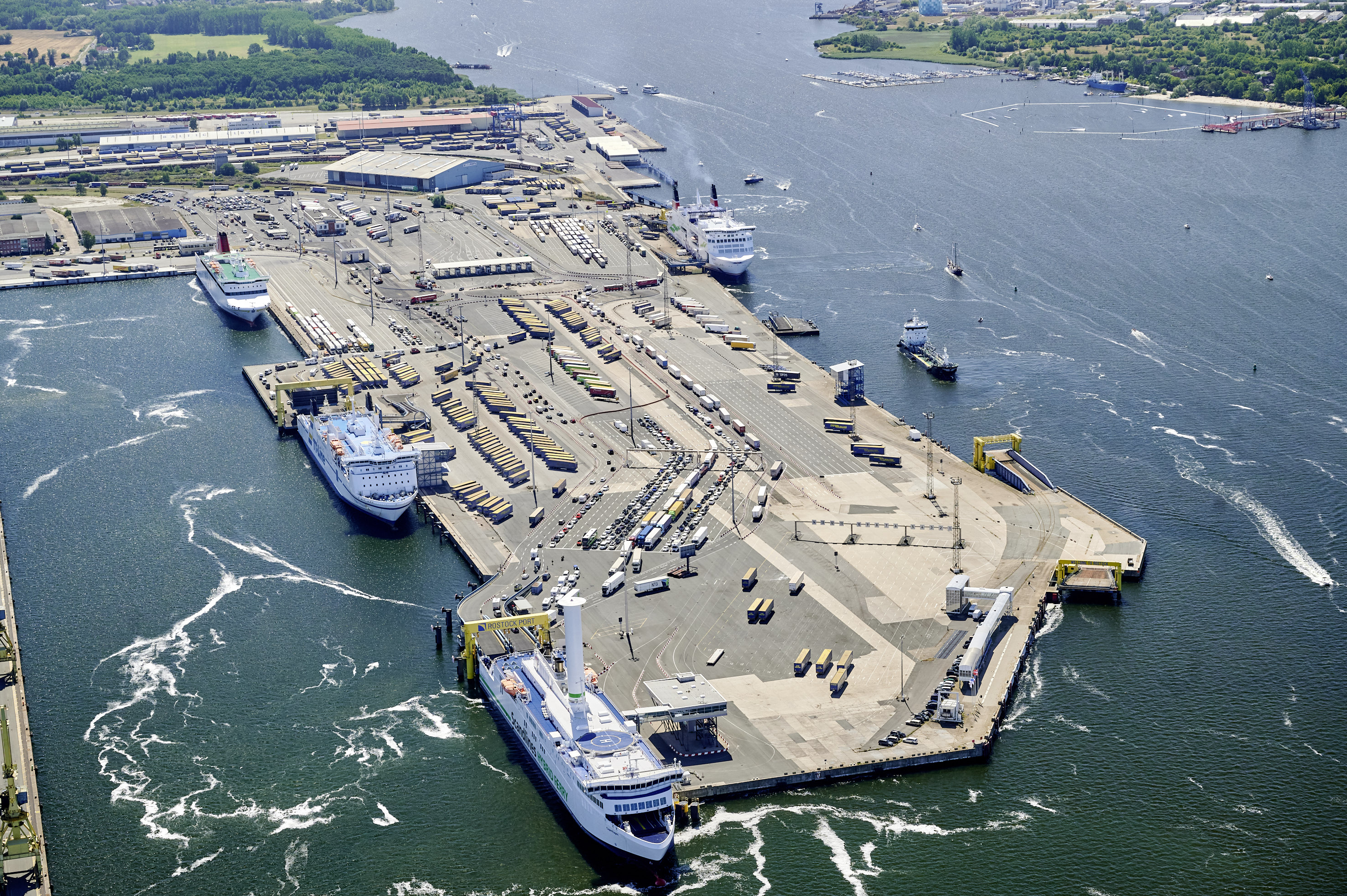
Aerial view of the Rostock ferry terminal, showing several passenger and cargo ferries docked, as well as logistics areas.

Ferry Terminal

From Rostock to Denmark and Sweden

The Rostock Ferry Terminal in the seaport is a major, modern transport hub on the German Baltic Sea coast. As a link between Germany and Scandinavia, the terminal offers travellers and haulage companies first-class connections, a high level of comfort and efficient handling. Whether you’re travelling for leisure or transporting goods, your journey north begins here safely and stress-free.

Spanning a generous total area of 200,000 square metres, the facility features five ferry berths, with berth 64 From Rostock to Denmark and Sweden
additionally equipped for the efficient handling of railway wagons.

The accessible ferry centre is located directly within the ferry terminal. It features ticket counters for the ferry operators Scandlines, TT-Line and Stena Line, a bistro, free Wi-Fi and a Reisebank cash machine.
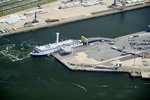
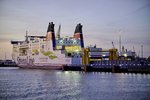
Aerial view of the Port of Rostock

The transport links allow for a direct onward journey, as the elevated road at the Rostock ferry terminal is directly connected to the A19 and A20 motorways.

From Hamburg

  • From Hamburg, take the A1 towards Lübeck
  • At junction 24 (Lübeck), turn right and follow the signs for the A20 towards Rostock
  • At junction 16 (Rostock), turn right onto the A19 towards Rostock-Überseehafen
  • Take exit 4, Rostock-Überseehafen/Krummendorf/Ostsee-Fähren
  • At the fork, turn right and follow the signs for Überseehafen/Fähren (E55)
  • Turn left onto the elevated road at the ferry terminal (E55)
  • Follow the signs to your booked ferry operator

From Berlin

  • From Berlin city centre, take the A10 onto the A24 towards Hamburg
  • At the Wittstock/Dosse junction, change onto the A19 towards Rostock/Rostock-Überseehafen
  • Continue along the A19
  • Take exit 4: Rostock-Überseehafen/Krummendorf/Baltic Sea ferries
  • Turn right at the fork and follow the signs for Überseehafen/Ferries (E55)
  • Turn left onto the Am Fährterminal flyover (E55)
  • Follow the signs to your booked ferry operator

From Stettin

  • From Szczecin city centre, take the DK13 onto the A6 towards Kołbaskowo/Berlin
  • From the German/Polish border, continue on the A11 towards Berlin
  • At the Uckermark junction, change onto the A20 towards Rostock
  • At the Rostock junction, change onto the A19 towards Rostock/Rostock-Überseehafen
  • Continue along the A19
  • Take Exit 4: Rostock-Überseehafen/Krummendorf/Baltic Sea Ferries
  • At the fork, turn right and follow the signs for Überseehafen/Ferries (E55)
  • Turn left onto the elevated road at the ferry terminal (E55)
  • Follow the signs to your booked ferry operator

Travelling by public transport

If you don’t have your own car, the Rostock ferry terminal is easily accessible by public transport via the ‘Seehafen Fähre’ stop. This stop is served by bus routes 19, 45 and 49 operated by Rostocker Straßenbahn AG (RSAG). There are two options for travelling from the main railway station:

  • Via Lütten Klein: Take the S-Bahn to Lütten Klein station and change there to bus routes 45 or 49.
  • Via Dierkower Kreuz: Take the tram to Dierkower Kreuz and change there to bus routes 45 or 49.

At the ferry center

If you are a pedestrian, please note that you must take the shuttle bus from the ferry terminal, which will take you to the ferry in about 3 minutes. The bus stop is on the eastern side of the ferry terminal, near the shelter.

Annual statistics on ferry passengers  2025

With 2.57 million passengers travelling on the three ferry routes operated by Scandlines, Stena Line and TT-Line to Denmark and Sweden, there was an increase of 30,000 ferry passengers compared with the previous year.

Contact person
ROSTOCK PORT

ROSTOCK PORT GmbH

Ost-West-Straße 32

18147 Rostock

www.rostock-port.de

Herr Daniel Krampikowski
Head of Sales