Intermodal Terminal
Transportation Hub and Railway Port
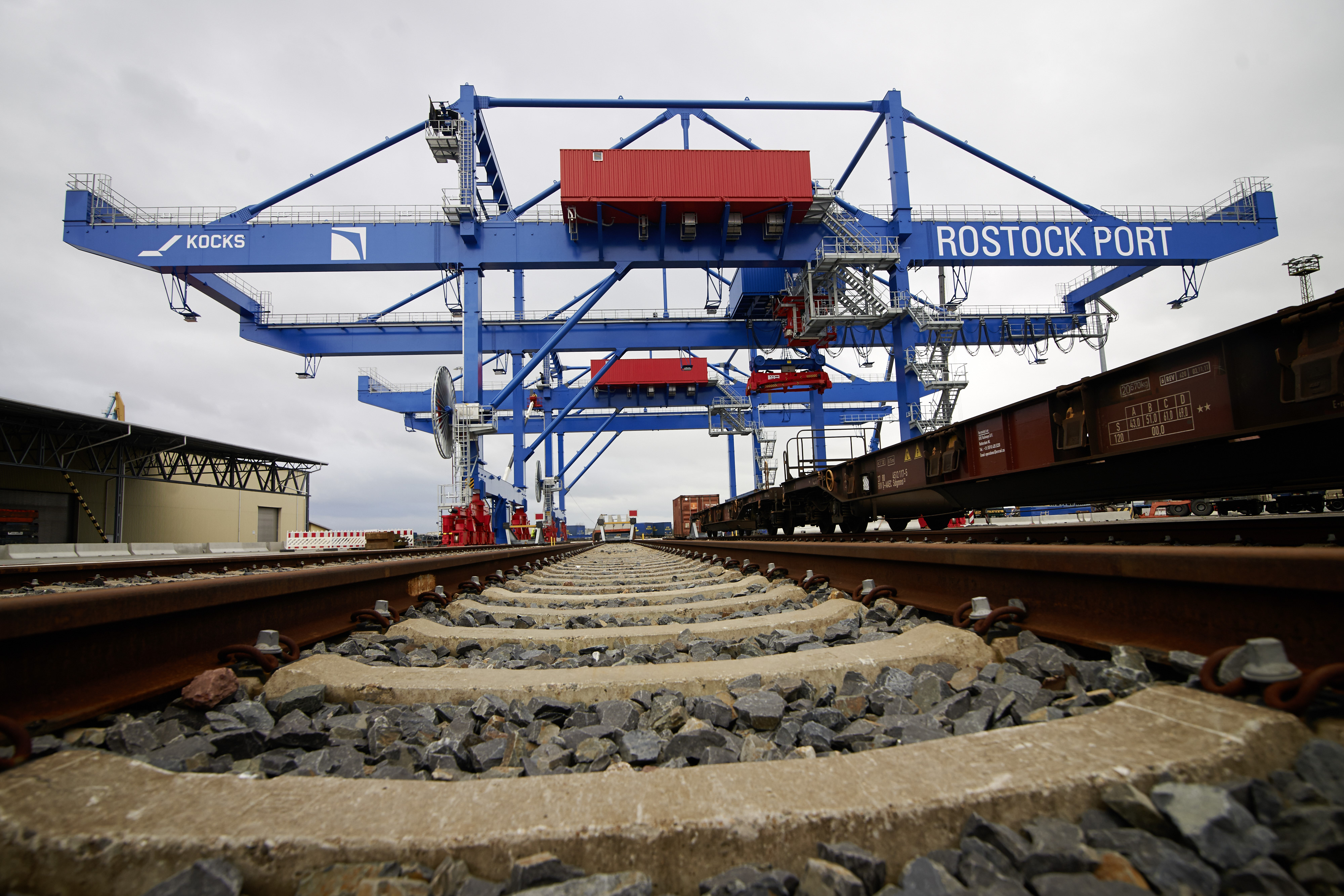
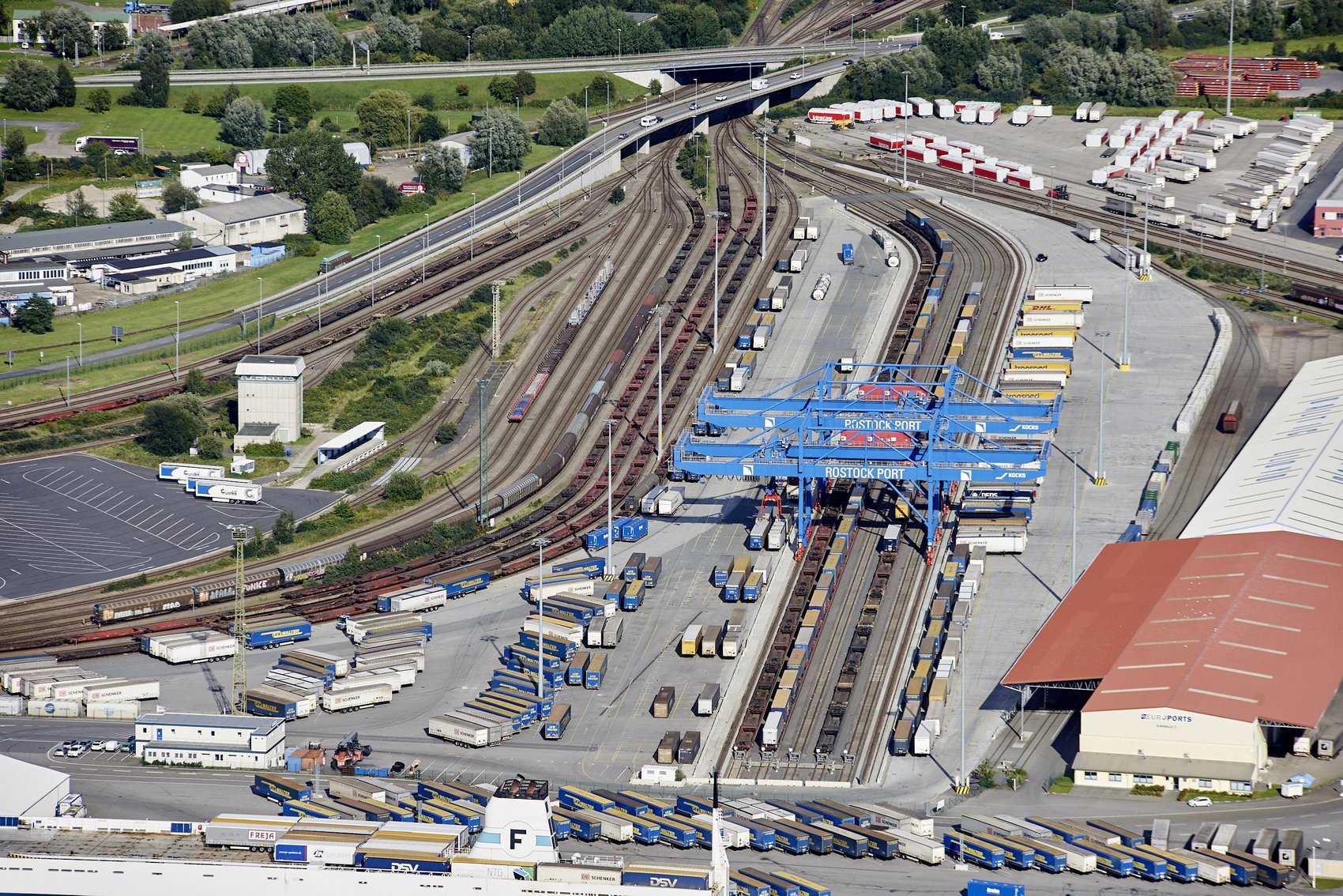
The Combined Transport Terminal (KLV Terminal) at the Port of Rostock, operated by Rostock Trimodal GmbH (RTM), serves as a central hub for environmentally friendly, intermodal transport, efficiently linking rail and road freight transport with ferry and RoRo connections. With 80,000 square meters of space, five dedicated train tracks, a 720-meter-long siding, and 24/7 operations, the infrastructure enables the handling of over 110,000 units annually.
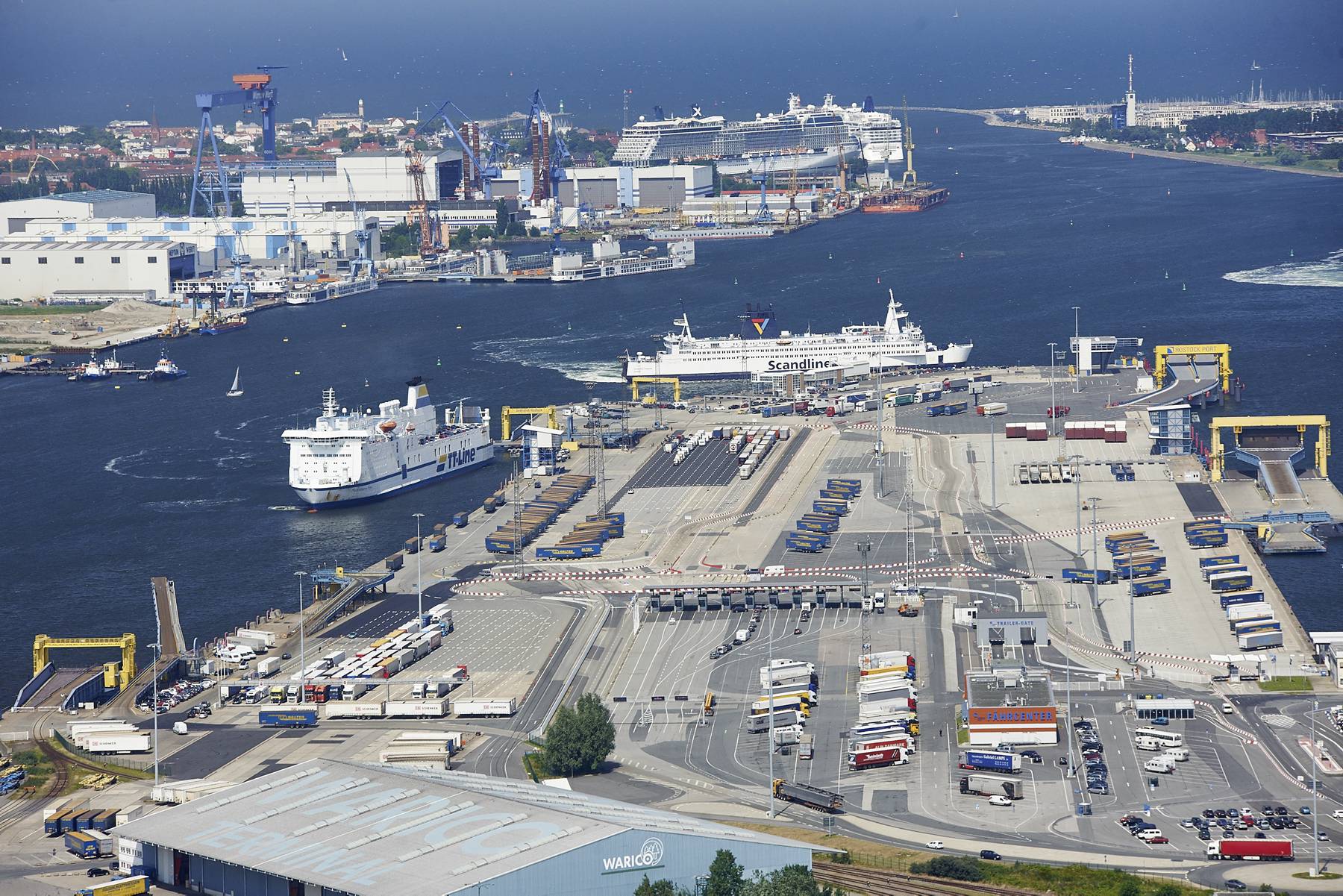
The Combined Transport Terminal (KLV) is located in the immediate vicinity of the RoRo terminal, the ferry terminal, and the car terminal. You can find out more about these terminals by clicking the buttons below.
Excellent Conditions
The Port of Rostock is optimally connected to the German highway network via the north-south A19 and the east-west A20 highways.
The terminal’s proximity to the ferry and RoRo berths enables short port turnaround times (e.g., train arrival at 2:45 a.m., loading at 6:00 a.m.), thus providing ideal conditions for optimizing the logistics chain.
In May 2012, ROSTOCK PORT GmbH, in collaboration with the regional construction company STRABAG AG, began renovating the terminal for combined transport (CT) south of Pier I while operations continued. The new, high-capacity transshipment terminal for rail, road, and maritime cargo was expanded by February 2014 to cover an area of approximately 30,000 square meters. The entire combined transport terminal spans about 70,000 square meters.
In addition to three additional track layouts and the southern crane runway, the entire southern transshipment area was rebuilt, and two gantry crane systems were installed.
2024 Port Process - Ferry Services and Intermodal Freight Transport
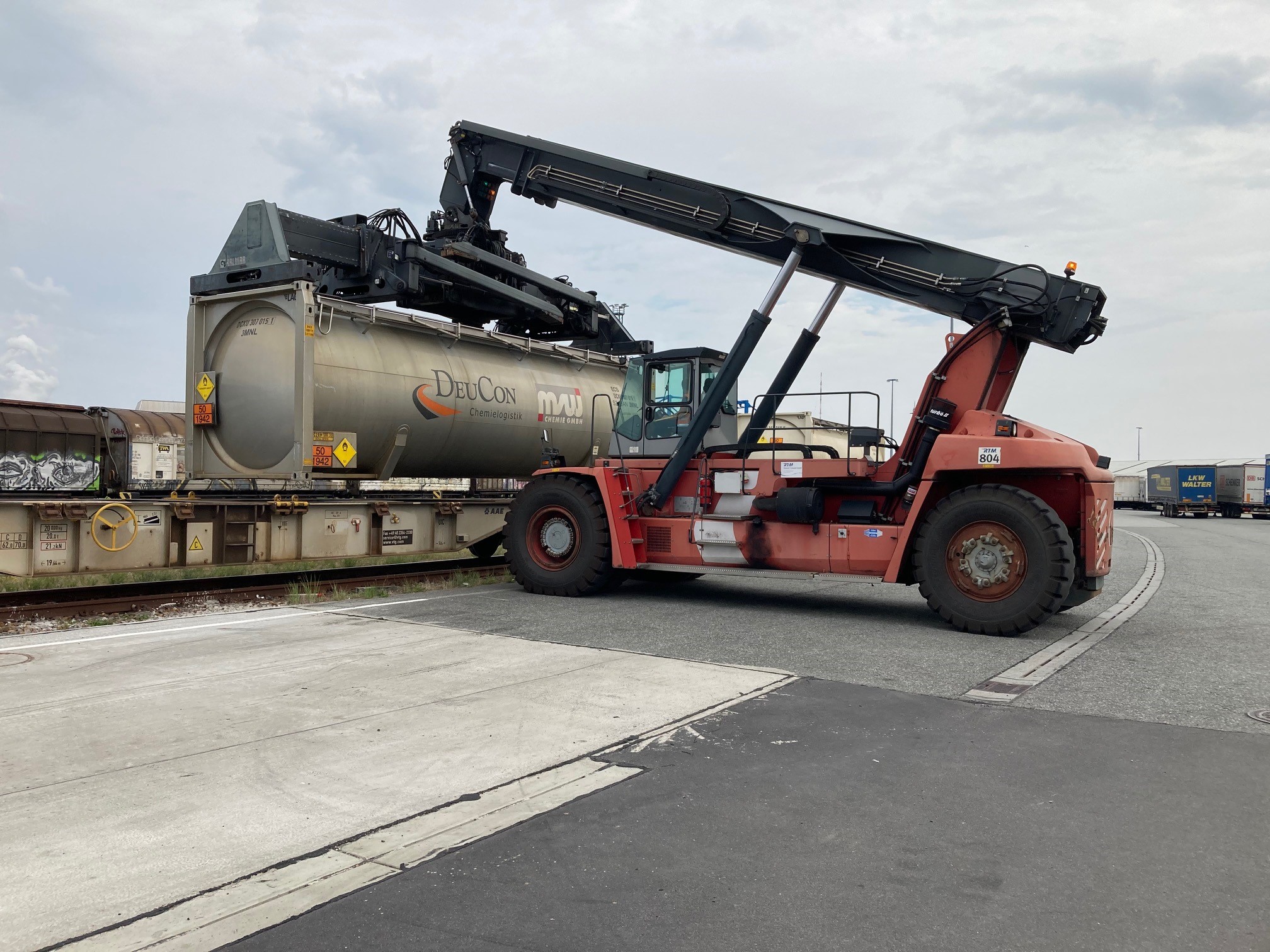
Anxious anticipation at the ferry terminal of the Rostock Overseas Port. Cars, RVs, small vans, and trucks are lined up in several lanes, ready to be shipped across the Baltic Sea. This also includes so-called trailers, which are loaded onto and unloaded from ferries and Ro-Ro ships using special tractor units. The trailers typically arrive at or depart from the Overseas Port via piggyback transport on special rail freight cars. The loading and unloading of the freight cars is carried out using two gantry cranes at the combined transport terminal. In intermodal logistics chains, this terminal serves as the port-side interface between rail and road freight transport. On the Sweden route, there are also two rail ferries equipped with tracks, which make it possible to transport rail cars on rails across the Baltic Sea. More than half of the total freight handled at the overseas port consists of rolling stock.
Discover how easy it is to be efficient transport routes – from rail to sea. The port of Rostock is your hub for sustainable, cost-saving and future-proof logistics.