Energy Port
Green hydrogen and its derivatives at the Rostock Energy Port
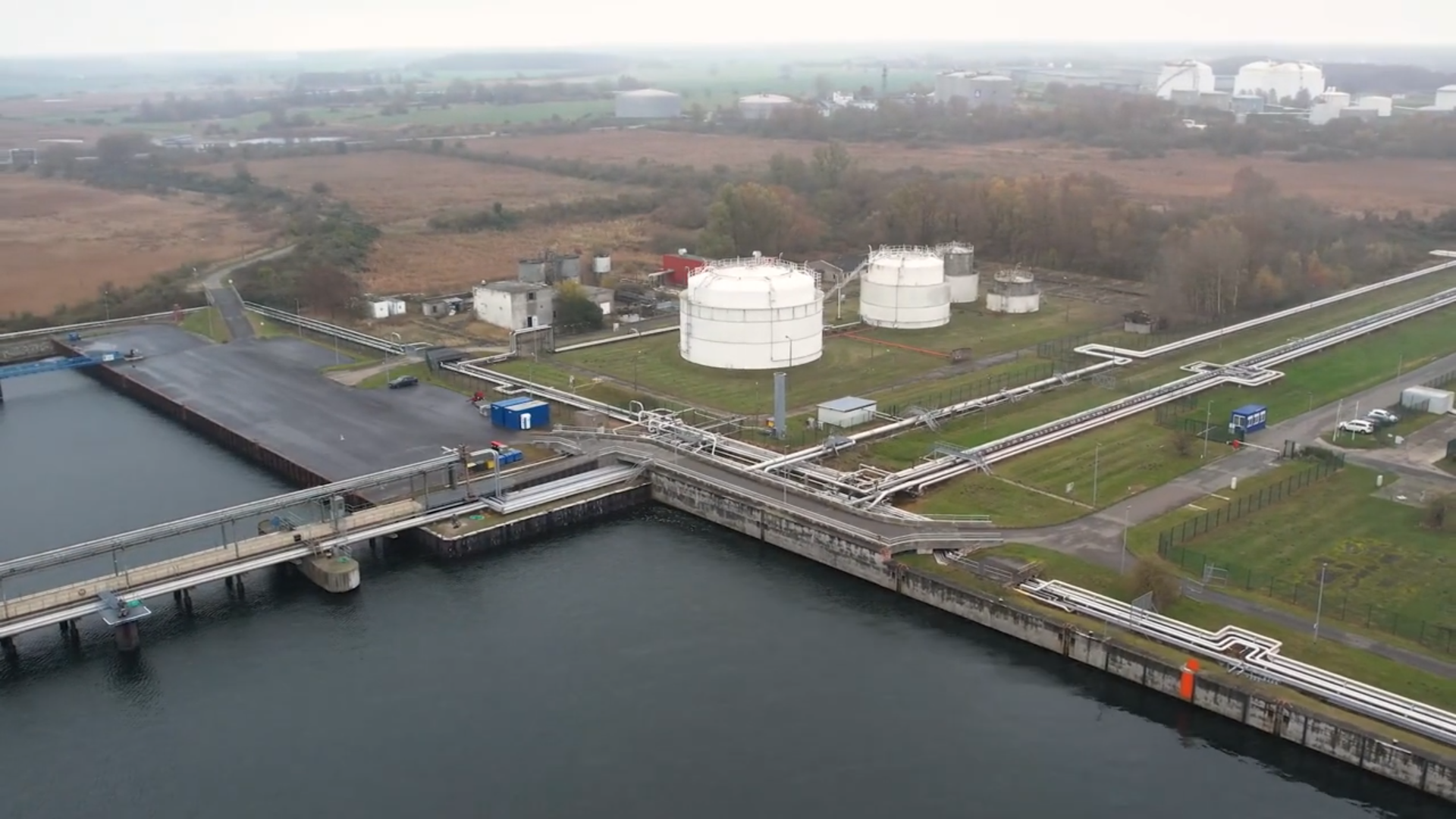
Green hydrogen and its derivatives will play a central role at the Rostock Energy Port in the future. The handling and use of fossil fuels will decline significantly in the medium term, to be replaced by green energy sources. The Port of Rostock already has the necessary conditions in place to establish itself as an import hub for green energy and as a location for the production of green hydrogen.
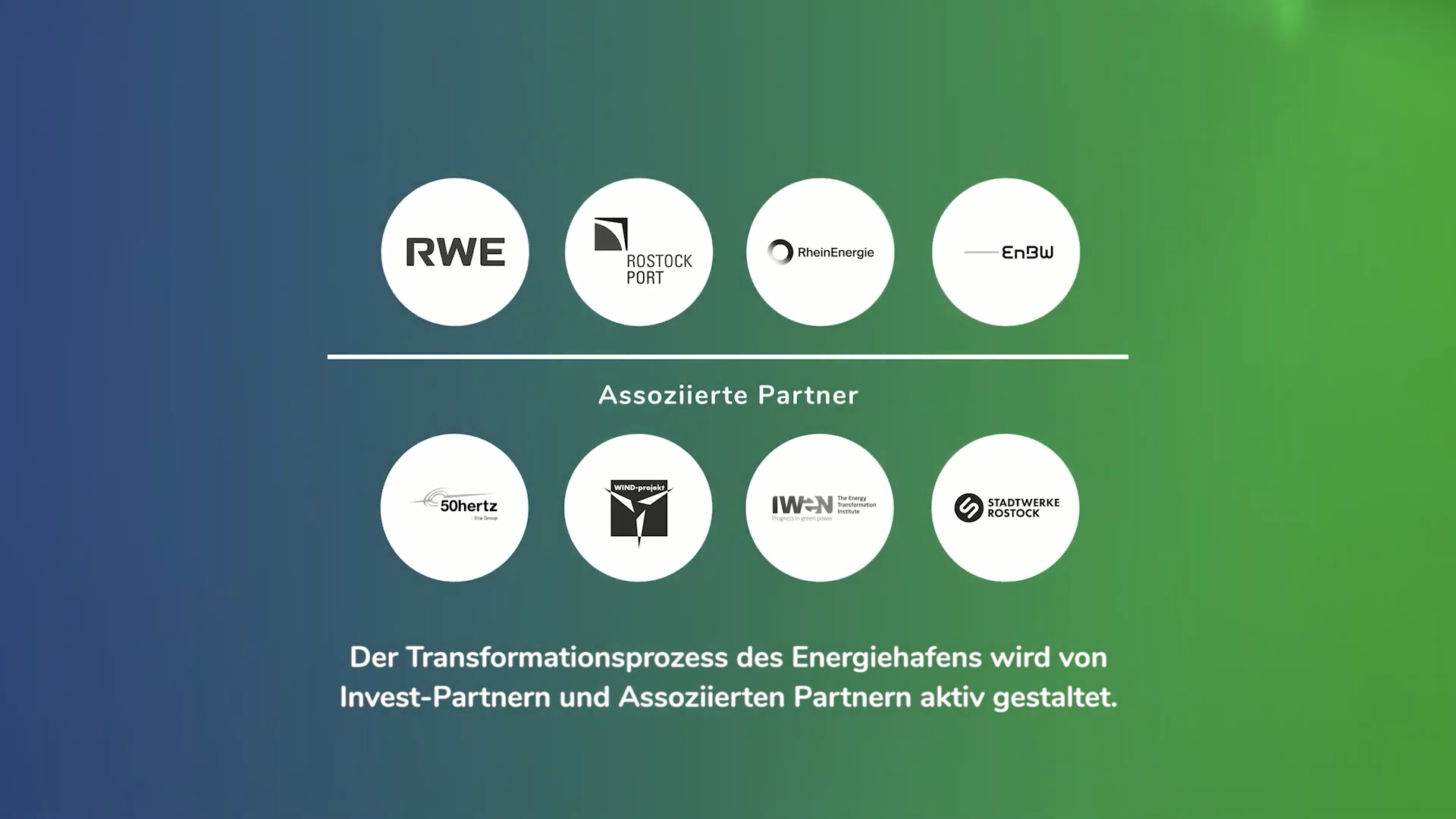
The company “rostock EnergyPort cooperation” was founded for the purpose of constructing a 100 MW green hydrogen production facility using federal and state funding. In addition to ROSTOCK PORT, the shareholders include EnBW, RheinEnergie, and RWE. The final investment decision is scheduled to be made in 2024, once all framework conditions have been assessed.
Thanks to the existing infrastructure, a value chain can be created whose output and capacity can be expanded in the future. Given that Germany will continue to rely on energy imports in the future and considering that energy has been imported through the Port of Rostock for decades, the Rostock Energy Port is to be further developed for the import of green energy sources, thereby making a significant contribution to a forward-looking, sustainable energy supply as well as to regional development.
Rostock Energy Port: Hydrogen Production and Import of Green Energy Sources
As part of ROSTOCK PORT’s sustainability strategy, the company is driving forward decarbonization projects and new business models in the hydrogen sector and in the import of green energy derivatives. These activities are a key component on the path to achieving climate neutrality at the port.
“Our strategic projects include our stake in Rostock EnergyPort Cooperation GmbH, the upgrading of infrastructure for green energy sources, the construction of Berth 5, and the provision of space for the import and storage of renewable energy sources,” explains Jens Scharner. “With this, we aim to play a pioneering role as an energy hub for the distribution of hydrogen in order to sustainably reduce carbon dioxide emissions and environmental impact.”
Construction of Deep-Water Berth 5 in the Oil Port
In June 2022, the contract for the planning of a deep-water berth in the eastern section of the Rostock oil port was awarded. The goal is to obtain a building permit promptly based on detailed and expedited planning in order to upgrade Berth 5 for future energy imports and to ensure a sufficient supply of sustainable energy via Rostock. The permitting process is currently being prepared in close coordination with the planning approval authority at the Ministry of Economic Affairs of Mecklenburg-Western Pomerania and will be officially initiated shortly. Construction is scheduled to begin in 2027, explains Jens Scharner.
Construction is expected to take about two years. Upon completion, the oil port’s harbor basin will be connected to the turning basin—which has already been dredged to a depth of 16.50 meters—at the same water depth. Since the construction work will take place primarily within the existing harbor basin, the impact on the natural environment can be kept to a minimum.
2024 Port Process — Liquid Cargo
Tankers are among the largest cargo ships handled at the Rostock Overseas Port. The six berths in the oil terminal handle, among other things, mineral oils, crude gasoline, rapeseed oil, biodiesel, methanol, ethanol, heating oil, and crude oil. A tank farm with a capacity of 700,000 cubic meters is available for the storage of liquid cargo. In addition to a pipeline for transporting crude oil to the refinery in Schwedt on the Oder River, a product pipeline connects the oil port with the Böhlen site in central Germany. After Germany switched its crude oil supply to maritime transport at the end of 2022, this type of cargo alone accounted for 5.9 of the total 7.9 million metric tons of liquid cargo handled in 2023. The oil port is operated by Grosstanklager-Ölhafen Rostock GmbH. Handling of bulk cargo.