Cruise Terminal
Rostock-Warnemünde particularly attractive for cruise passengers
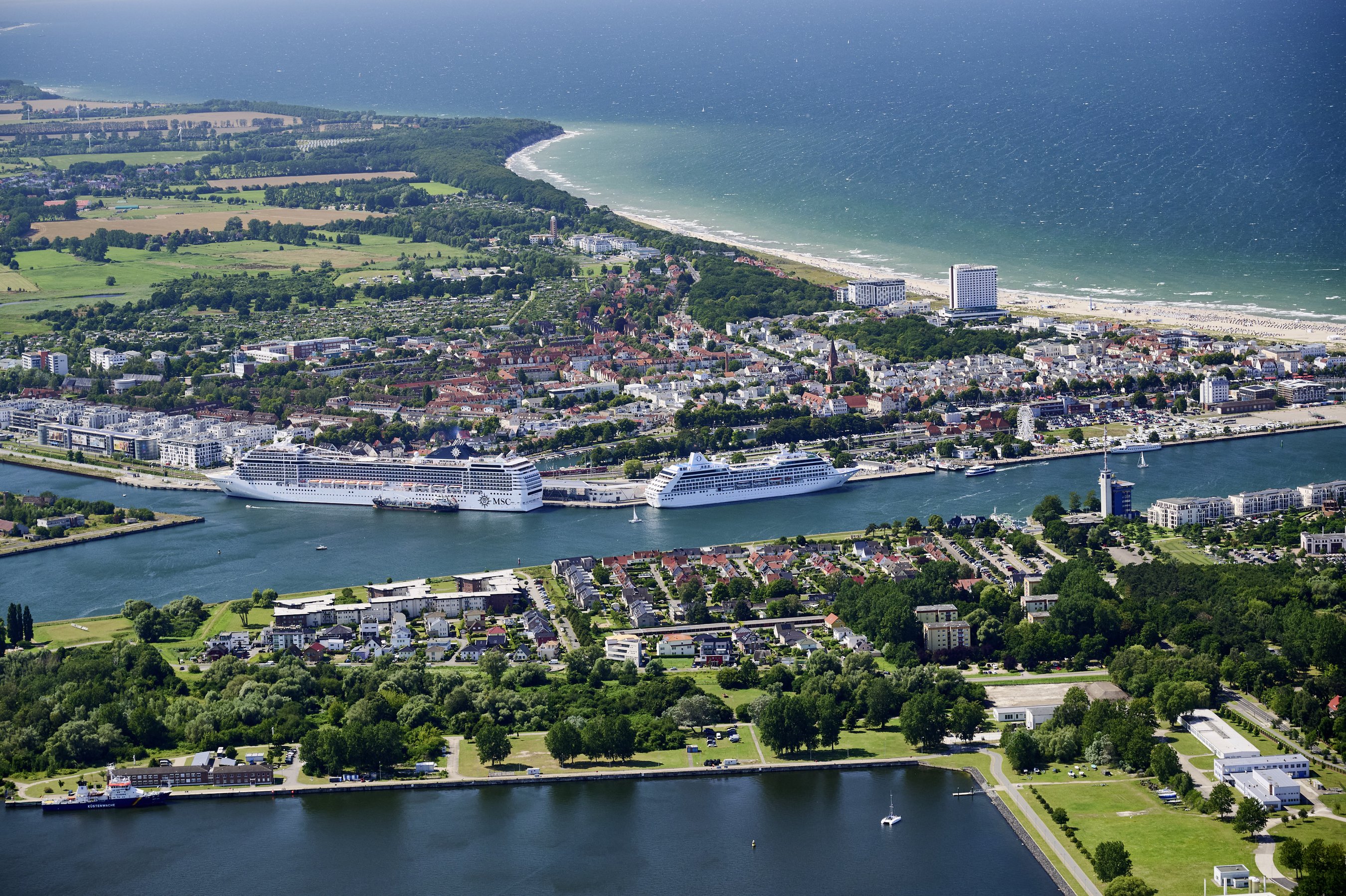
The Warnemünde Terminal is one of the most important cruise destinations on the Baltic Sea and offers modern infrastructure for efficient, safe, and comfortable passenger embarkation and disembarkation. With three berths and two modern terminal buildings, up to three cruise ships can be handled simultaneously in Warnemünde. There is also an alternate berth at the Rostock Overseas Port.
The Warnemünde Cruise Center (WCC) at Berth P7 opened in 2005 and is complemented by the Warnemünde Cruise Center 8 (WCC8), which began operations in 2020. Both terminal buildings offer modern check-in and service areas and provide optimal conditions for passengers, cruise lines, and port partners.
A particular focus is placed on sustainability and environmental protection. Since 2012, ship wastewater (graywater) has been accepted at all three berths in Warnemünde and discharged into the public sewer system. This enables environmentally sound disposal directly within the port.
Shore power connections are also available at berths P7 and P8. While docked, appropriately equipped cruise ships can shut down their onboard generators and meet their energy needs via the power grid. This reduces emissions, noise, and CO₂ emissions and makes an important contribution to more sustainable cruise shipping in Warnemünde.

Cruise Baltic – Network for Cruise Tourism in the Baltic Sea
Under the brand name “Cruise Baltic,” 18 ports from ten countries joined forces in 2005 as part of a marketing project to boost cruise tourism in the Baltic Sea. The goal was, and remains, to increase the number of cruise passengers in the individual port cities.
Rostock is represented in the “Baltic Cruise Project” by ROSTOCK PORT GmbH and is the only German founding member of this international network.
The project was initiated by Copenhagen and Stockholm, which are among the busiest cruise ports in the Baltic Sea. Other founding members of the port network were: Helsingør in Denmark; Kalmar, Malmö, Helsingborg, Visby, and Karlskrona in Sweden; Turku and Helsinki in Finland; St. Petersburg in Russia; Tallinn in Estonia; Riga and Liepaja in Latvia; Klaipeda in Lithuania; Gdynia in Poland; and Oslo in Norway, the only non-Baltic Sea port.
The marketing project was funded by the European Union through INTERREG grants for the first three years and has been financed exclusively by membership dues since 2007.

